
Cat Health Guide · IPAWLIO Journal
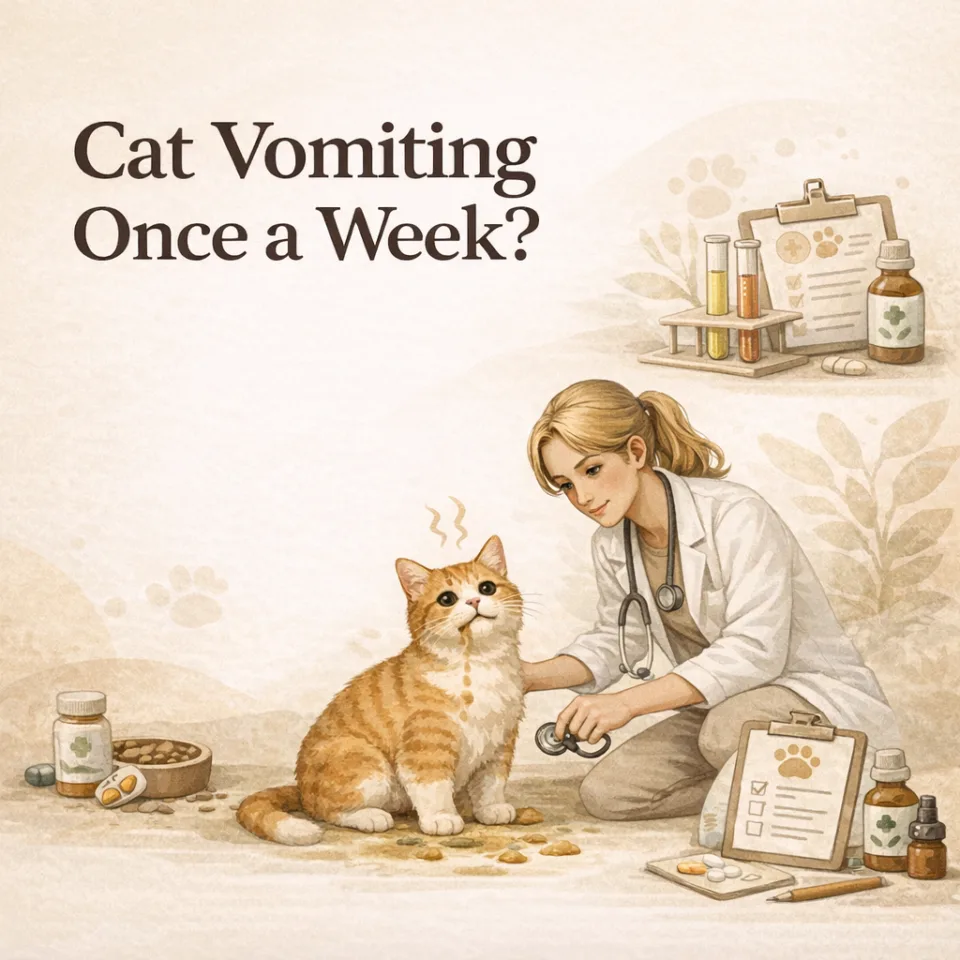
Cat Vomiting Once a Week? Causes, Warning Signs & When to See a Vet
Is it normal for a cat to vomit once a week? Learn the common causes of frequent vomiting in cats, how to tell vomiting from regurgitation, the warning signs that matter, and when veterinary care should move higher on your list.
One of the most common things cat owners say is, “My cat throws up sometimes, but otherwise seems fine.” That may be true once in a while. But if your cat is vomiting once a week, that pattern deserves attention.
Chronic vomiting in cats is easy to normalize because cats are subtle, they often recover quickly after an episode, and hairballs can make everything look harmless. But repeated vomiting is not just messy. It can be your first clue to food intolerance, inflammatory bowel disease, parasites, hairball-related gut irritation, hyperthyroidism, kidney disease, pancreatitis, or even a foreign body.
The things owners learn to brush off are often the very things worth discussing sooner. IPAWLIO Editorial Note
A clinical starting point
Weekly cat vomiting is not something to dismiss.
If your cat is vomiting every week, even if they still seem bright and are eating, the pattern is not something most veterinarians would casually label as normal. A single episode now and then can happen. A repeating pattern is different. Frequency matters.
This is especially true if your search starts with questions like why is my cat vomiting, cat vomiting after eating, cat vomiting yellow liquid, or cat throwing up hairball every week. These are not small concerns. They are patterns worth paying attention to.
First things first
Make sure it is actually vomiting.
Many owners use “vomiting” to describe any food coming back up, but regurgitation and vomiting are not the same thing. That distinction matters because it changes the list of likely causes and what your vet may want to investigate next.
Usually involves effort
- Heaving or abdominal contractions are often present
- May include bile, foam, partially digested food, or hair
- Nausea signs such as lip licking, swallowing, or restlessness may happen beforehand
More passive and often sudden
- Often happens soon after eating or drinking
- Food usually looks undigested
- It may come up with little warning and little effort
If your cat seems to bring food up right after meals with very little effort, what looks like vomiting may actually be regurgitation. That is an important detail to mention at the vet visit.
Common patterns behind the symptom
Why a cat may throw up repeatedly
There is no single answer to why a cat vomits. The causes range from relatively mild to more serious, and the pattern matters as much as the vomit itself.
1. Hairballs
Hairballs are familiar, but familiarity can be misleading. A hairball once in a long while is different from a cat throwing them up regularly. Frequent hairballs can point to overgrooming, poor gut motility, skin disease, stress, or underlying gastrointestinal trouble.
2. Eating too fast or too much
Some cats eat with impressive speed and then bring food back up right away. If vomiting tends to happen after meals, look at meal size, eating pace, competition with other pets, and whether the food is still undigested.
3. Diet change, food sensitivity, or poor digestive tolerance
A new formula, richer treats, too many snacks, or a food intolerance can all lead to repeated vomiting. Cats often do better with slow diet transitions and stable feeding routines.
4. Parasites
Parasites are not only a kitten problem. Depending on lifestyle and prevention history, intestinal parasites can still contribute to recurrent vomiting.
5. Chronic gastrointestinal disease
In many adult cats, especially those with a longer history of “sensitive stomach” episodes, repeated vomiting raises concern for chronic enteropathy, inflammatory bowel disease, or other digestive tract disease.
6. Foreign material or partial obstruction
String, foam, plastic, ribbon, plant matter, and small household objects can all cause intermittent or persistent vomiting. Cats do not always look dramatically sick at first.
7. Systemic disease in older cats
In senior cats, repeated vomiting can be associated with hyperthyroidism, chronic kidney disease, pancreatitis, liver disease, or cancer. This is one reason age should always shape how quickly you act.
Color and content still matter
What about yellow liquid, foam, or bile?
Searches like cat vomiting yellow liquid are common for a reason. Yellow fluid often suggests bile, which may show up when the stomach is empty, when nausea is ongoing, or when the digestive tract is irritated.
The same goes for white foam, partially digested food, clear fluid, or repeated dry heaving. None of these patterns should be ignored when they happen often.
When it becomes urgent
Some cases can wait. Others should not.
Contact a veterinarian promptly if vomiting is paired with any of the following:
- Vomiting more than once a week, especially if the pattern is new or worsening
- Blood in the vomit or dark, coffee-ground material
- Weight loss, poor appetite, or refusing food
- Lethargy, hiding, weakness, or dehydration
- Diarrhea at the same time
- Repeated unproductive retching
- Suspected toxin exposure or chewing on string, ribbon, or plastic
- Increased thirst or noticeable changes in urination
Useful details before the appointment
What to track at home before your vet visit
If your cat is still stable enough to monitor before the appointment, keep notes. A clear history often saves time and helps your vet narrow down the cause faster.
When is it happening?
Weekly, after meals, overnight, early morning, or completely at random?
What does it look like?
Hairball, bile, foam, undigested food, digested food, grass, or foreign material?
Was there nausea or heaving?
Did your cat seem restless first, or did the food come up quietly and suddenly?
Look for small changes
Even mild weight loss matters in cats, especially when vomiting becomes chronic.
Check recent changes
New food, extra treats, plants, string toys, supplements, or stressful changes at home can all matter.
Yes, a quick photo helps
A photo of the vomit can sometimes help differentiate bile, blood, hairball, or regurgitated food.
What a workup may involve
What your vet may check
If a cat is vomiting every week, a good workup often starts with history, physical exam, weight trend, hydration assessment, and abdominal palpation.
Depending on age, pattern, and exam findings, your vet may recommend fecal testing, bloodwork, urinalysis, thyroid testing, imaging, diet trials, or additional gastrointestinal testing. The symptom may look simple from the outside, but the medical reasons behind it are not always simple.
While waiting for answers
What you can do at home
- Feed smaller, more frequent meals if your cat tends to eat too fast
- Introduce new food gradually over several days
- Brush regularly if hairballs are part of the pattern
- Reduce access to string, ribbon, plants, and chewable plastic
- Keep a symptom log instead of relying on memory
- Do not start random over-the-counter remedies without veterinary guidance
Home support can be useful, but it should not replace a proper medical assessment once vomiting becomes recurrent.
The takeaway
Patterns matter more than many owners realize.
Cats are very good at looking fine until they are not. That is why repeated vomiting is so often underestimated. A cat who vomits once in a blue moon may simply have had a minor upset. A cat who vomits every week is giving you a pattern, and patterns deserve a closer look.
If you have been telling yourself, “It’s probably just hairballs,” this is a good moment to pause. In feline medicine, the things owners normalize are often the very things worth discussing sooner.
FAQ
Common questions cat owners ask
Is it normal for a cat to vomit once a week?
No. An isolated episode may happen occasionally, but vomiting once a week is frequent enough to justify veterinary attention.
Why is my cat vomiting undigested food right after eating?
That may be regurgitation rather than true vomiting. Fast eating, meal size, swallowing problems, or esophageal issues can all play a role.
What does yellow vomit mean in cats?
Yellow vomit often contains bile. It may be seen with an empty stomach, ongoing nausea, stomach irritation, or other digestive problems.
Are frequent hairballs normal?
Not really. Frequent hairballs should prompt a closer look at grooming habits, skin health, stress, diet, and possible gastrointestinal disease.
When should I take my cat to the vet for vomiting?
If vomiting is happening weekly, is increasing, includes blood, comes with lethargy or weight loss, or involves repeated retching, your cat should be examined.
Medical note: This article is educational and does not replace an examination, diagnosis, or treatment plan from your veterinarian. If your cat is vomiting repeatedly, especially with appetite changes, lethargy, weight loss, blood, or suspected toxin exposure, seek professional care promptly.